Before diving into the article, I’d like to thank everyone for the overwhelming positive feedback on the first part. It means a lot, and I sincerely hope this series raises awareness on a topic I find crucial. Too often, I see how misunderstood dogs are in training context. Agility has evolved tremendously since I started 15 years ago. Today’s dogs require a far greater range of skills. Yet, while the average agility handler might have 10 different commands for how their dog should jump, they often lack a solid understanding of their dog’s drives and instincts.
I like to compare a dog’s instinctual brain (where drives and instincts reside) to hardware, while training serves as the software we upload. When you understand and respect what’s already “built-in” to a dog’s brain, training becomes much smoother!
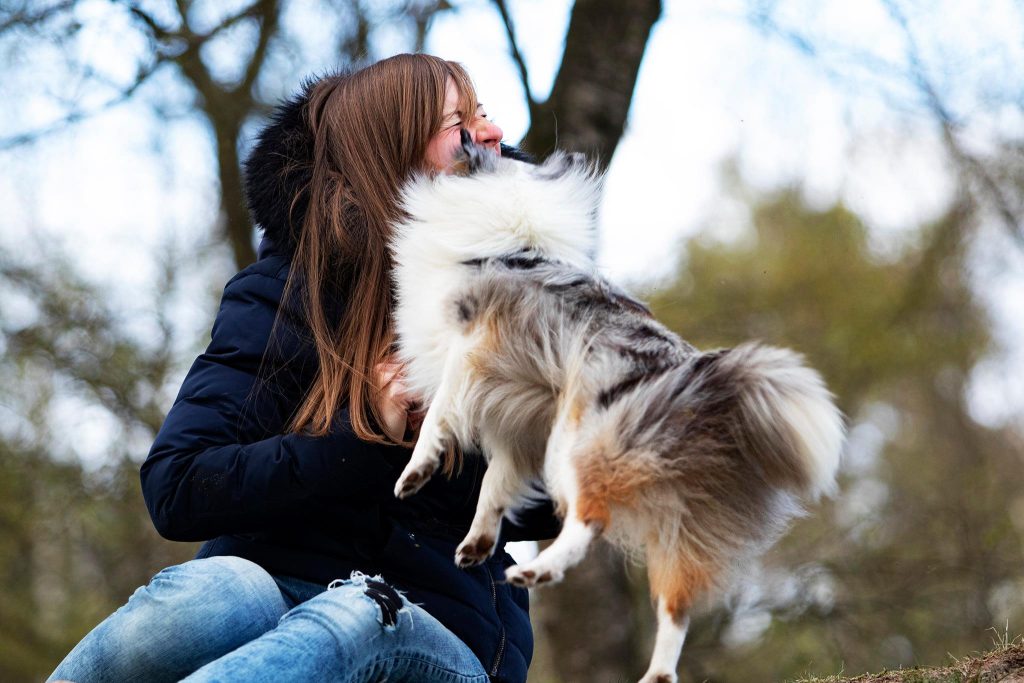
As mentioned in the first part of this series, drives and instincts are always present in dogs, varying by breed and individually. If there’s a specific trait tied to a breed that you dislike, it’s wise to consider another breed. You cannot simply “train away” behaviors that are hardwired into your dog’s nature. However, it can be expected that, dogs from working lines will exhibit stronger drives compared to those from non-working lines. While you can’t erase these drives, you can manage them!
Managing Drives
Drives, which manifest as instincts, are always present in dogs. Since they are hardwired into the brain, they will find ways to surface. As a dog owner and trainer, it’s your responsibility to channel these drives to where they can be beneficial.
Herding dogs were bred to assist farmers with sheep, bloodhounds to track, retrievers to retrieve etc. Though most of us don’t require these characteristics directly, these strong drives can be harnessed in different dog sports and activities.
To manage drives effectively, we must allow dogs to express them in appropriate contexts while preventing them from manifesting inappropriately.
Adding Drives to Trained Behaviors
- Foundation Training: Begin by training an exercise in a calm environment where the dog can focus, think, and learn (using the thinking part of brain).
- Increasing Speed: Once the dog understands the exercise, you can “add” drives to the training to make the performance faster and more dynamic.
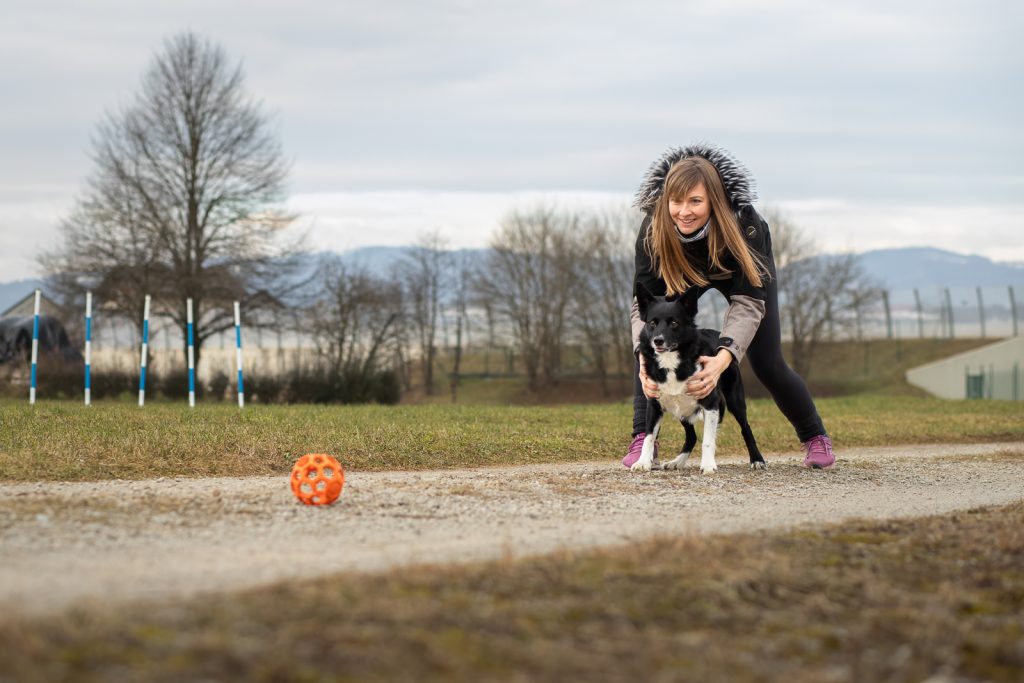
Example: Let’s say you’ve trained your dog to wrap around a barrel (a foundation exercise for tight turns on jumps). The dog understands which side to turn to and responds to verbal commands, but they only perform the task at a walk or trot. This indicates understanding, which is essential, but now you want to add speed and power to the exercise.
Brainiacs vs. Maniacs:
- If your dog is a “brainiac” and doesn’t easily become over-aroused, you can introduce multiple triggers at once. For example, give the command with more excitement and encouragement in your voice, reward with a toy immediately after the task, start running yourself, or give the dog a faster approach to the barrel.
- If your dog is a “maniac” prone to becoming over-driven, introduce triggers one by one. Start by calmly rewarding with a toy and progress to adding speed very gradually; first add some of dog’s motion, later more handler motion, then increase the distance … Ensure the dog remains focused with each trigger before introducing the next.
When carefully triggering drives when training a certain behavior – you are connecting the thinking and instinctual brain. And if you are doing it precisely, you allow them to work harmoniously.
Time for Distractions
Once your dog is performing reliably (understanding the task and executing it with speed), it’s essential to introduce distractions. Distractions are simply triggers unrelated directly to the primary exercise, but they test your dog’s focus and self-control. Examples include placing toys on the ground that the dog must ignore, or the handler stopping suddenly during an exercise to ensure the dog completes the task regardless of the handler’s motion.
However, the way you introduce distractions is critical:
-
Gradual Introduction of Distractions:
When presenting a distraction, start small and reduce other triggers temporarily (e.g., reduce speed).
For instance, instead of moving in a flowy way that dogs naturally find easy, you plan to stop suddenly (handler suddenly stopping = distraction), while your dog wraps around a barrel. First try just slowing down before introducing a complete stop to make the situation easier for the dog.
If using a toy on the ground as a distraction, begin by placing it farther away from the exercise.
-
Prevent Self-Rewarding Behavior:
If your dog manages to interact with the distraction (e.g., picking up a toy left on the ground), this will strengthen the unwanted behavior. To prevent it, train such situations with a helper so he can remove the toy if necessary. At start, I usually train running contacts with a static toy on the ground. To prevent self-rewarding, I cover it with a bowl, so I am still the one in control.
-
Ensure Success with Step-by-Step Progress:
Always ensure your dog can complete the task with the added distraction before introducing new ones. For example, if using toys, start with them farther away and gradually move them closer over time. This progressive method allows your dog to build confidence and focus without becoming overwhelmed.
The Risk of Not Addressing Triggers
Failing to desensitize your dog to distractions and triggers is a common reason dogs struggle with behaviors like start-line or contact stays. For example, a dog at the start line is presented with an overwhelming array of triggers: the sight of the first jump, the handler’s movements, and the anticipation of running. If these triggers haven’t been systematically introduced and controlled during training, the dog may break focus or self-reward by acting impulsively.
Addressing distractions gradually, while maintaining control over their influence, is key to ensuring your dog remains focused and responsive even in the most stimulating environments.
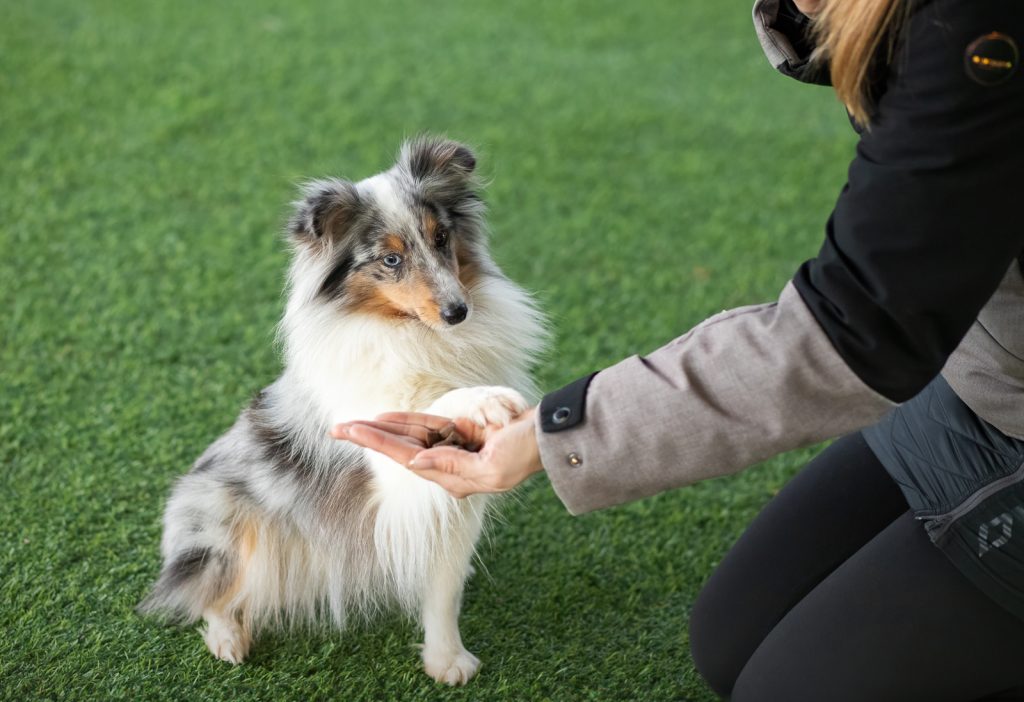
AVOIDING INAPPROPRIATE EXPRESSIONS OF DRIVES: A REAL-LIFE EXAMPLE: TIGER AND HIS HERDING INSTINCTS
Let me share a real-life example of how I managed Tiger’s herding instincts when they appeared in an inappropriate context. This story highlights the importance of recognizing and addressing instinctual behaviors before they become problematic.
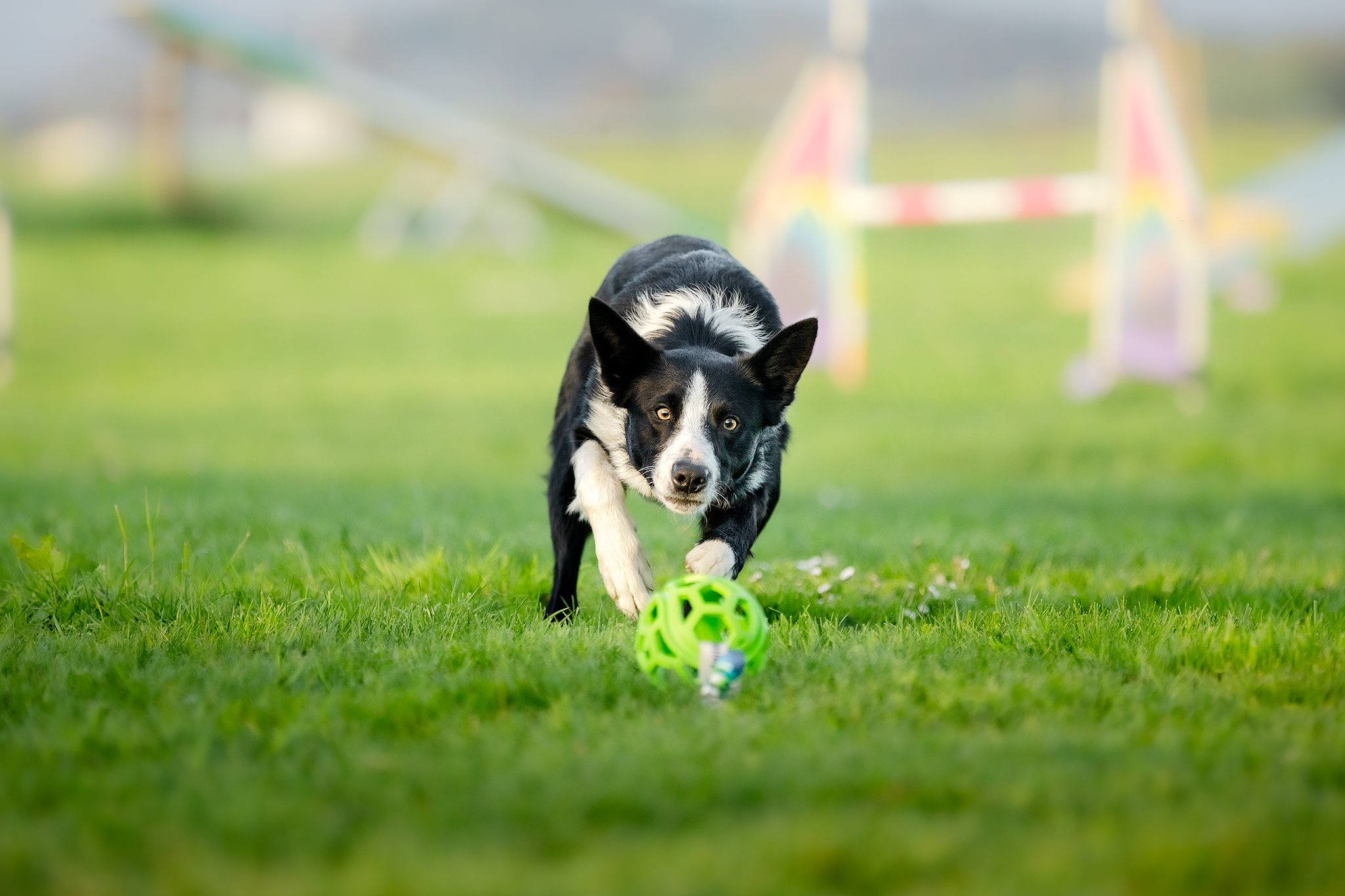
When Tiger was around five months old, we were out walking along the pavement of a quiet, rural street. Suddenly, a car bypassed us, and Tiger’s herding instincts immediately kicked in. Without warning, he lunged toward the car in a classic Border Collie herding pose: head low, eyes fixed, and body tense. This behavior was purely instinctual, deeply ingrained in him due to his working lines.
At that age, his brain was not yet developed enough to manage such strong triggers, which is entirely normal for a young Border Collie. These instincts are what make Border Collies exceptional working dogs, but in everyday life, they can create safety concerns if not addressed. I was fortunate to live in a rural area at the time, where encounters with cars were infrequent. However, even in this setting, I took immediate steps to prevent this behavior from becoming stronger.
HOW I MANAGED THE SITUATION
Avoidance was my first strategy. Whenever possible, I tried to steer clear of situations that might trigger his herding instincts, like walking near moving cars. But since complete avoidance wasn’t realistic, I also worked hard to redirect his focus in the moments when exposure to triggers was unavoidable.
In such situations, we played a lot and I kept high-value treats on hand and delivered them at a rapid rate while maintaining his attention with games or simple obedience commands like “watch me” or “touch my hand.” The goal was to occupy his mind with something else.
WHAT WOULD HAVE HAPPENED IF I HAD IGNORED IT?
Had I ignored this initial incident and allowed Tiger to repeat the behavior, the instinctual reward of herding cars would have strengthened it. This is how many Border Collie owners inadvertently create a problem. When a dog successfully “practices” a behavior like herding cars—it’s reinforced by their own instincts, making it significantly harder to be managed later.
Another example occurred when Tiger was 10 months old. During an agility competition, my husband noticed how focused Tiger seemed while sitting by the ring, watching the activity. At first, it appeared Tiger was calmly observing, but we quickly recognized the intensity of his “eye” and realized Tiger was fixating on the agility action in a herding-like manner. Understanding the importance of preventing this, he immediately took Tiger for a walk to redirect his focus to more appropriate activities.
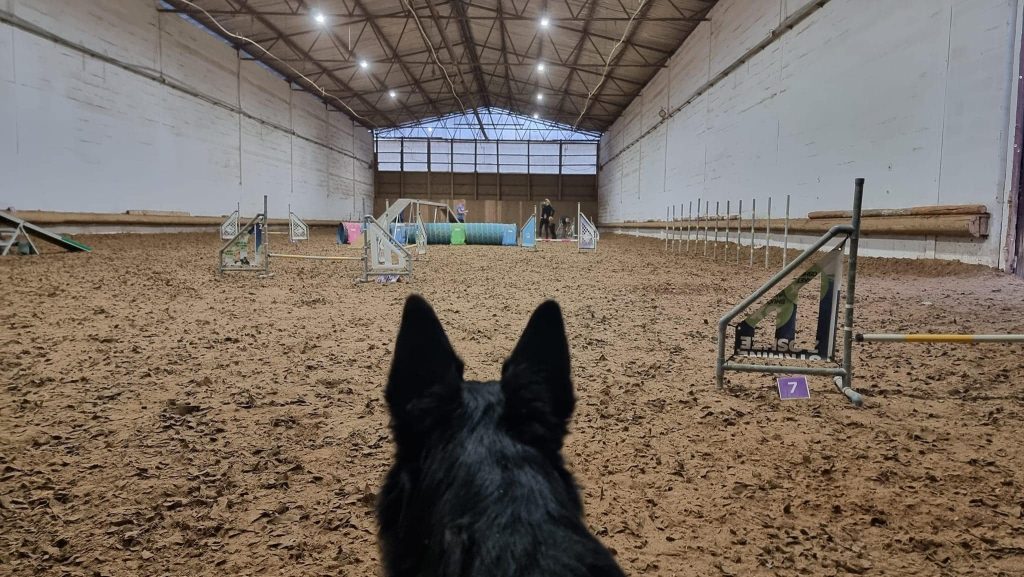
Besides avoiding the triggering situations and redirecting the focus, we played plenty of games for impulse control, and we reinforced some alternative behaviors to make them super strong in the following period. After a few months, the triggers mentioned earlier weren’t even triggers anymore. New neural connections in his brain were formed, and he learned that agility is much more than just watching others, and that a moving car is nothing compared to chasing and tugging on a toy. His drives became connected to behaviors where they were wanted! I believe this is the most important part of training a puppy or a young dog, and this will be the main focus in my on-line puppy class for future agility dogs that starts in May.
Forming Positive Patterns
Before introducing new skills, it’s crucial to understand how the foundational principles of managing drives and distractions feed directly into building positive patterns (good habits). While managing drives ensures your dog channels energy productively, and distractions test their focus, it’s consistent practice and structure that truly solidify these behaviors into habits. Let’s dive into how to structure training to ensure lasting success.
You definitely don’t want to over-train your dog, nor should you aim to do endless amounts of training. However, consistent repetitions are crucial to forming patterns (habits)! You can check my previous article for a detailed explanation of how habits are formed.
It’s important not to assume your dog truly knows an exercise just because they did it correctly once or twice. This doesn’t mean you’re done with training. Mastering a skill takes time and depends greatly on the individual dog. The stronger your dog’s instinctive brain compared to their thinking brain, the more structured training they’ll need to create habitual responses to specific cues. And of course, the reverse is true for dogs with a naturally stronger thinking brain.
Take my Tiger (again) as an example. He’s a dog with extremely strong drives, as you’ve likely noticed by now. Through experimentation, I found a training system that works best for him. Oddly enough, a big inspiration for me came from my own learning curve while practicing Italian with the DuoLingo app (and no, I’m not sponsored by them!). The app encourages you to maintain a daily streak, even if you only complete one short exercise. They use strategic intervals to repeat words, phrases, or sentence structures, making sure you practice just enough without overwhelming you.
Imagine practicing the same thing over and over every single day—frustration builds, boredom sets in, and you can fall into a pattern of mistakes. On the other hand, practicing only once or twice a month means you lose progress, spend time trying to recall lessons, and struggle to move forward. Neither approach is effective.
On the other hand, it is enough to repeat a certain skill just occasionally if it has been mastered previously!
The key to mastering a new skill lies in finding the right balance: enough repetitions to reinforce learning, paired with necessary breaks for rest and mental processing. That balance is important for dogs, as too many repetitions just isn’t good for their bodies nor their mind.
How Do We Train?
Let’s say you’re teaching a new jump skill, like the “in” exercise, where your dog takes a jump from the handler’s side. Because this is an advanced agility skill (so we can assume the dog already understands the basic idea of what agility is about), and you are going to practice it on real agility equipment (the jump), it’s more likely the dog will immediately be more driven than if you trained a new trick in your living room. And when drives are involved (or when your dog doesn’t cope well with mistakes and repetitions) you want your trainings to be short and successful with plenty of rewards.
When you restrict yourself to fewer repetitions, you’re forced to plan your training carefully, setting the dog up for success. Driven dogs thrive with the repetitions carefully applied, and it ensures more sensitive, thoughtful dogs don’t become frustrated.
Usually, I limit the training to 3–4 repetitions of one skill in one direction. Ideally, I aim for three successful tries, but if I need to correct something, I then give it one additional attempt. After that, I let the dog rest for about a minute and then repeat the exercise in the opposite direction.
If the dog gets all three tries correct, I might add an extra challenge—like introducing handler motion—when practicing it to the other side. If the challenge goes well, I’ll repeat it once more and finish with an easier setup for the final repetition. However, if the dog struggles with the challenge (in our case of training the “in” by avoiding the jump or taking it from the opposite direction), I’d give him another try and if he still isn’t successful, I’ll simplify the setup to ensure their next attempt is successful. I try hard to never to repeat the mistake more than twice. Mistakes are part of learning, but your foundation should be built on success, not errors.
In the next training session that preferably happens the next day, I revisit the same skill. If the dog succeeded with the added challenge in the previous session, we pick up from there. If not, I return to the simpler setup.
I then give the dog at least one, but ideally two or three, rest days before practicing the skill again. This allows their brain to “sleep on it,” process the information, and solidify their learning. To sum it up; I like to work on a certain skill two days in a row, followed by two or three days when we work on something else/rest and then repeat it again in two consecutive days …
I gradually introduce new challenges (adding distance, handler’s motion, speed of the dog, obstacles before and after …) while maintaining a high success rate. This approach not only keeps training enjoyable for both the dog and handler but also helps build the muscle memory and solid understanding we aim for. In my next article I will also explain what to do when you get stuck with a certain challenge, and it seems there is no way to overcome it and progress.
While this is the guideline I follow for my own training of new skills, every dog is different. What remains universal is the importance of keeping repetitions low, rewards high, and incorporating rest—both during sessions (to allow blood flow to the brain and muscles to function at their best) and between training days (to let neural connections form during sleep). There’s plenty of scientific research on this topic that can be found on-line if you’re curious to explore further!

No matter what you’re working on with your dog, achieving the desired results requires time and dedication. It’s not just about training and rest; sometimes, it’s simply about allowing your dog time to mature physically and mentally.
For less experienced handlers, or if your dog is highly driven, my advice is to avoid jumping into agility too early. Agility is full of triggers: fast running, handler motion, barking, and lots of excitement in general.
I’ve had several students start agility with dogs who were already young adults. Instead of diving into agility too soon, they focused on less stimulating activities during their dogs’ earlier months and build strong foundations and relationship with their dog. As a result, their progress in agility was astonishingly fast once they started with it.
Even if you have a typical “agility breed,” there’s no need to rush into the sport. Long-term success comes from building solid foundations. Dogs need time and training to learn impulse control in less stimulating environments. Make sure your dog has opportunities to succeed in manageable situations before introducing them to the high-energy world of agility. Starting too soon might overwhelm your dog, delaying progress rather than speeding it up.
Key Takeaways
-
Understand & Manage Drives
- Drives are hardwired and vary by breed. You can’t remove them, but you can redirect them to appropriate outlets like dog sports.
-
Adding Drives to Behaviors
- Start by teaching a skill calmly. Gradually add triggers like handler motion or toys to build speed and excitement while adapting to your dog’s temperament.
-
Introducing Distractions
- Add distractions gradually, starting small and increasing difficulty.
- Avoid self-rewarding behaviors (e.g., picking up a distraction toy).
-
Prevent Unwanted Expressions of the Drives by
- Avoidance of triggers,
- Redirection with rewards,
- Teaching alternative behaviors, and
- Impulse control games.
-
Building Positive Patterns
- Use consistent, well-timed repetitions to form habits. Limit the repetitions and ensure high success rate.
- Alternate training days with rest for mental processing.
Final Tip: Don’t rush into high-energy activities like agility. Build impulse control and focus first for long-term success.
The last part of the series will address common agility problems and offer practical solutions for handlers looking to overcome challenges in their training journey. Stay tuned for these insights to round out your understanding of working with a working dog.
Like what you’ve read? Sign up to my newsletter so you don’t miss new articles when published.