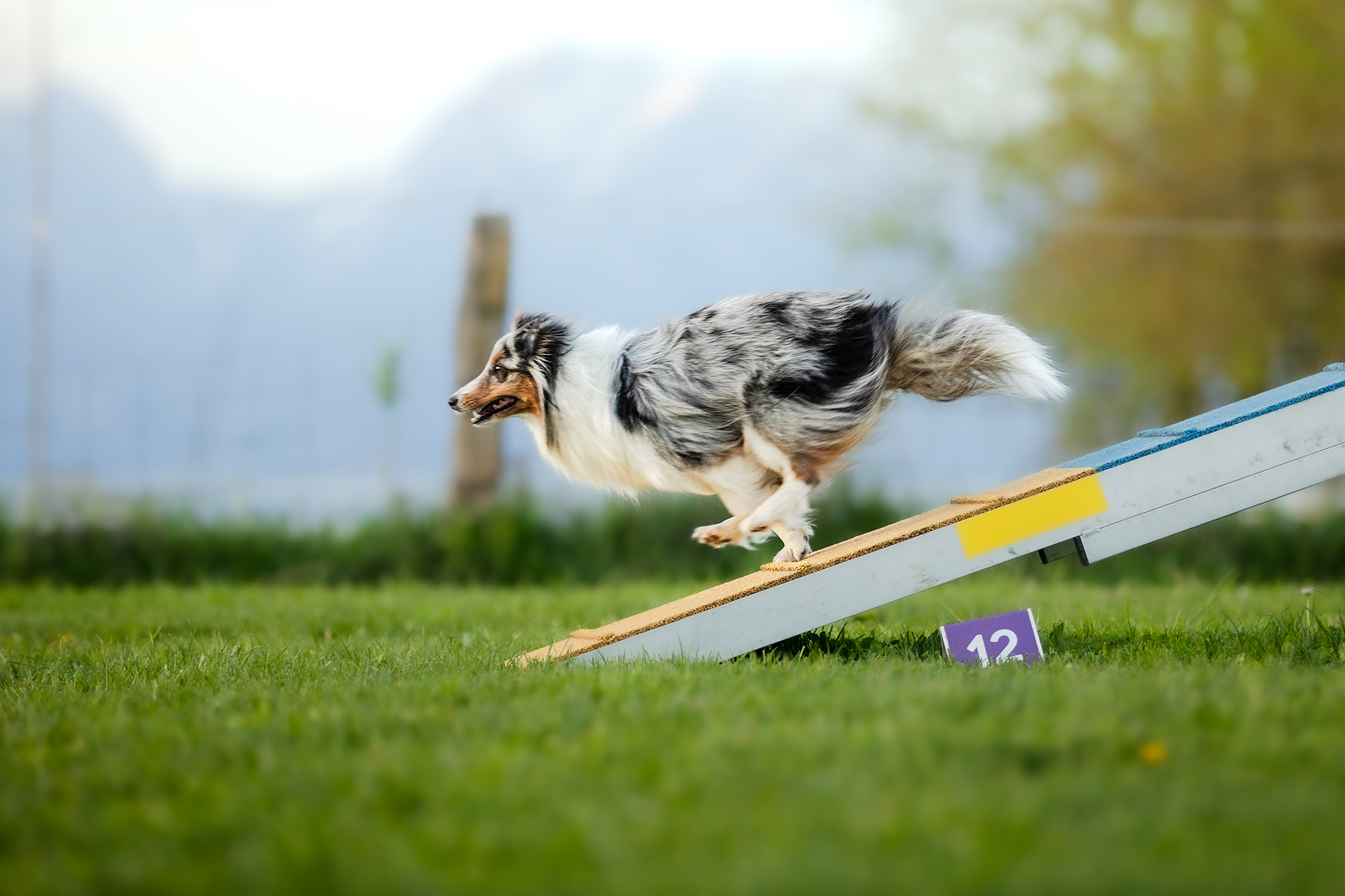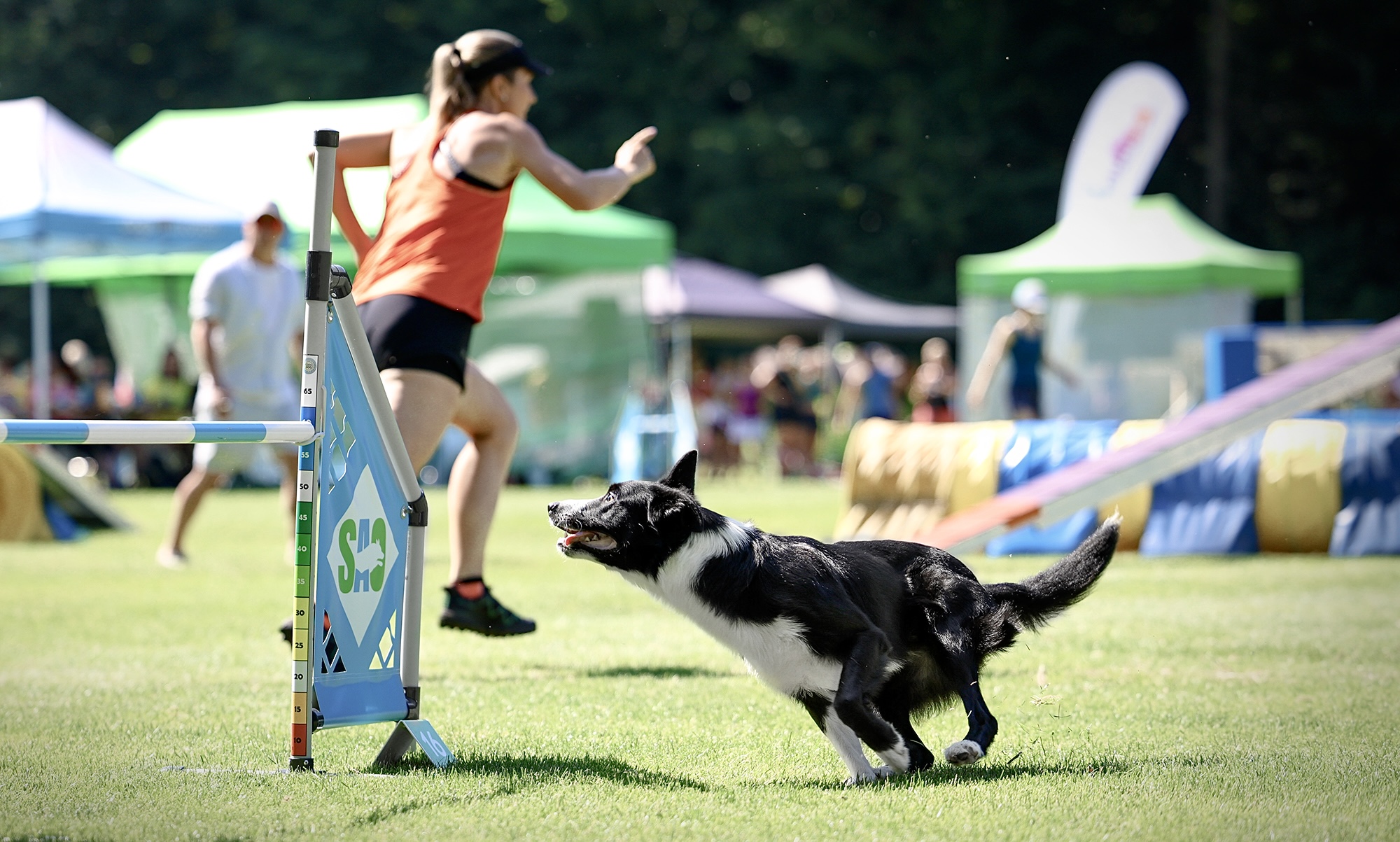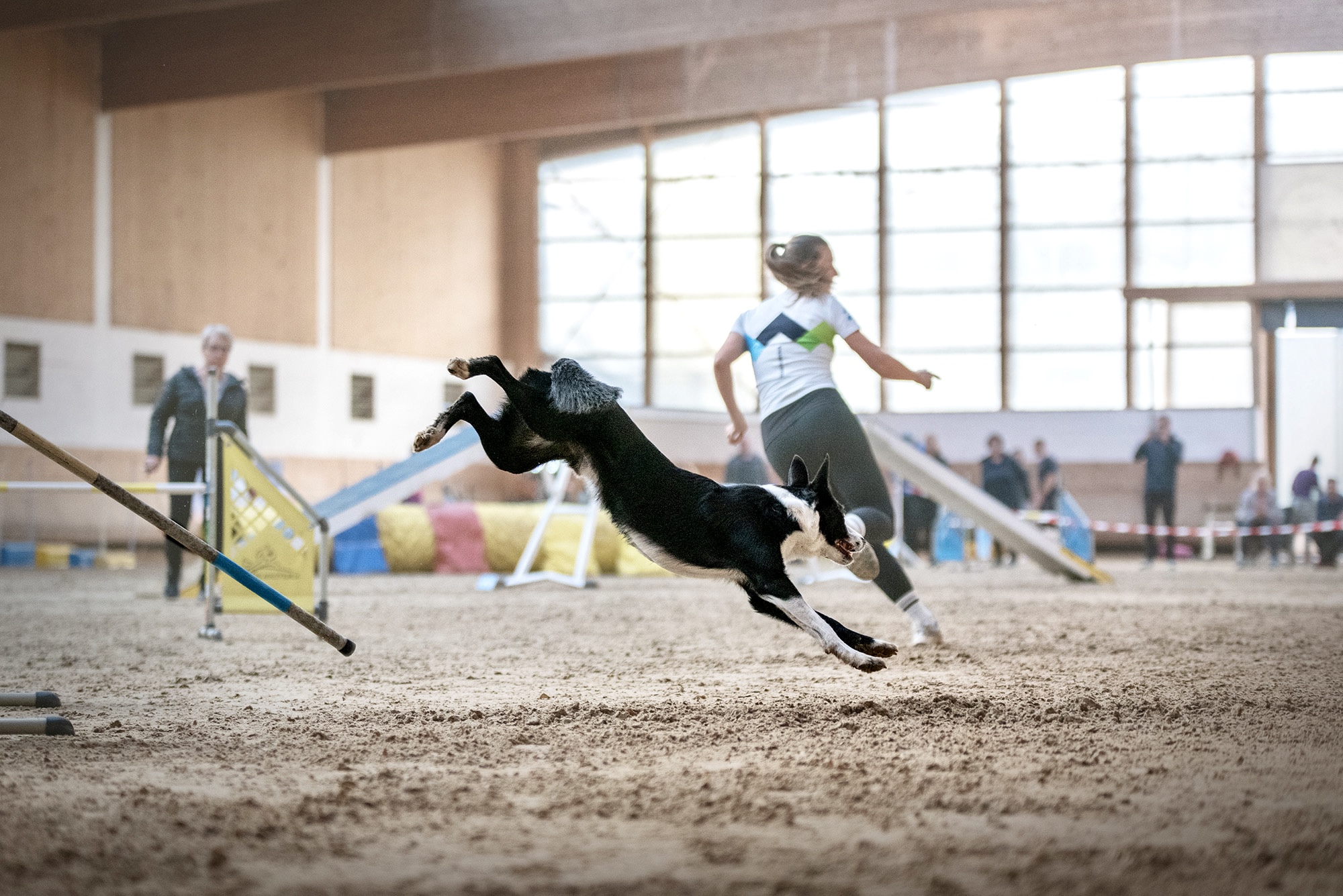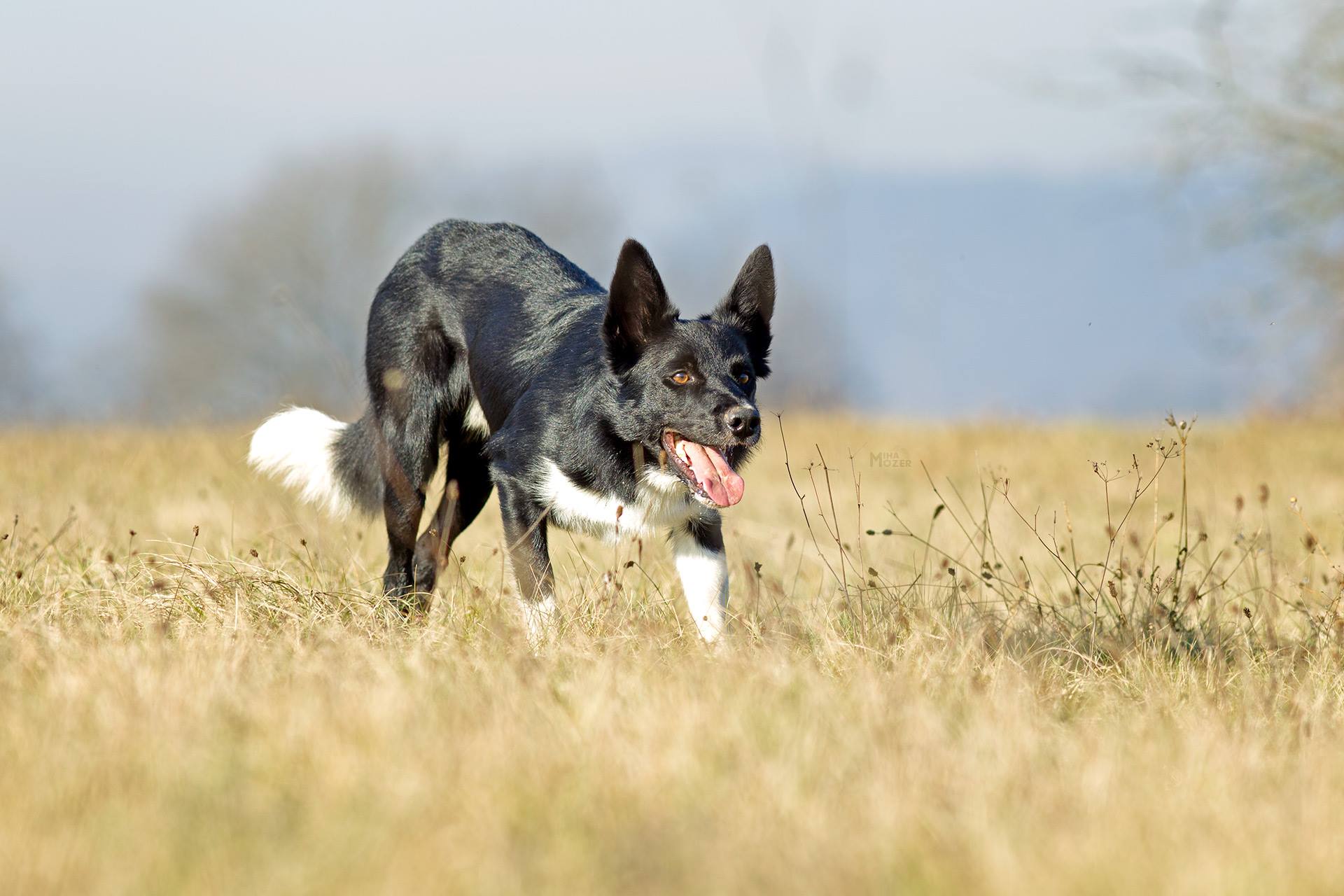
When deciding on the topic for my first training article, I struggled to choose where to begin. I knew I didn’t want to write a simple “how-to” piece—but rather something more meaningful—something that would truly resonate with all of us. As I mentioned in my previous blog post, I gave approximately 1,000 agility lessons last year. They allowed me to witness countless moments of success, joy, and incredible skills. But it also exposed me to frustration and challenges that weren’t easily resolved.
In some cases, less-than-ideal situations were quickly fixed with simple handling or training adjustments. However, in other instances, the issues required more than a quick fix. When I analyzed these recurring problems, I noticed a common thread that connected them.
This realization led me to write about a more complex topic: understanding drives, instincts, habits, and how these elements shape our dog’s performance. Why do some dogs grasp a specific exercise in training but struggle to replicate it when running a course?
• Why don’t they hit the dogwalk contact when running full speed toward the tunnel?
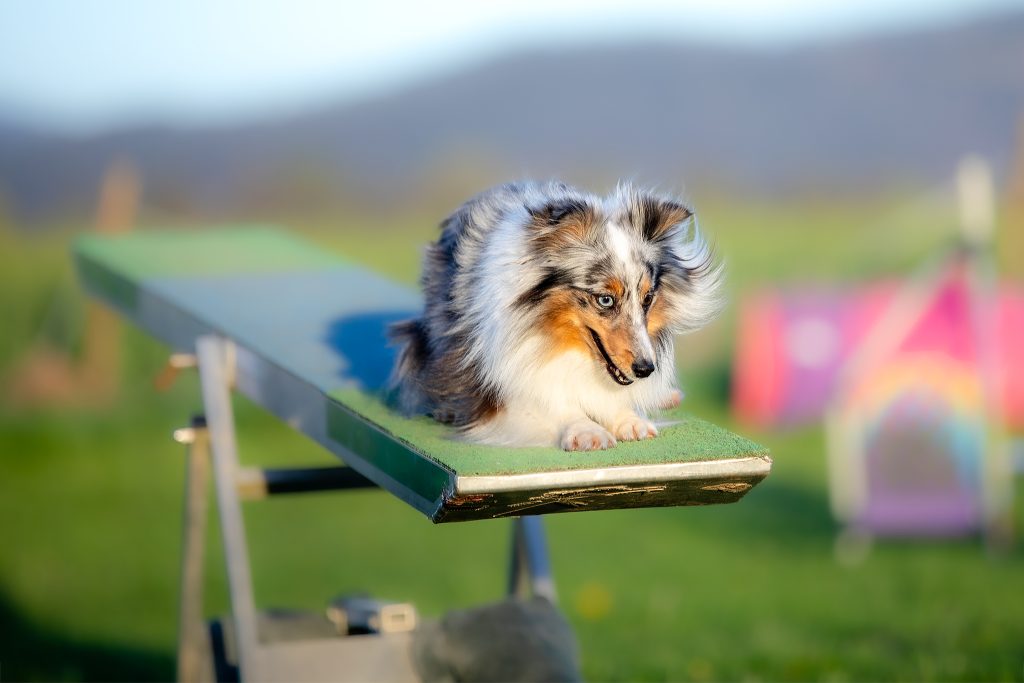
• Why don’t they wait on the seesaw or at the start line?
• Why don’t they decelerate when asked for collection on a jump or to hit the weave entry?
If a dog typically performs well in these situations and a mistake appears out of the blue, the cause is very likely new. It could be an injury, an unfamiliar distraction, or fatigue. But when the same mistake occurs repeatedly, forming a pattern, the problem usually runs deeper.
So Where In The Training Process Did It Go Wrong?
Everything seemed perfect initially—the dog demonstrated understanding and consistency. But as speed and excitement increased, the behavior fell apart. The answer lies in the dog’s drives, instincts, and impulsive behaviors. It’s connected to the part of the brain that doesn’t consciously think—it simply reacts.
The Thinking Brain vs. The Instinctual Brain
The dog’s brain (like ours) is a complex organ, but for the sake of simplicity, let’s divide it into two functional parts:
1. The Thinking Brain:
This is where information is processed, decisions are made, and actions are deliberate. In training new skills, this is the state of mind we aim to work with—a calm, focused dog capable of thinking, learning, and willingly responding.
2. The Instinctual Brain:
This is the primal, automatic part of the brain. It governs fast, instinctive reactions and behaviors driven by built-in drives and instincts.
What Are Drives And Instincts?
Drives are built-in forces that fulfil essential needs, like food and reproduction and are crucial for survival. These drives are present from birth and don’t require external triggers—they stem from internal pressures. When a drive is satisfied, the brain releases serotonin, the “happiness hormone.”
Instincts are the external manifestations of these drives, triggered by specific stimuli. Instincts are hardwired responses that help satisfy drives, ensuring survival and the associated serotonin release.
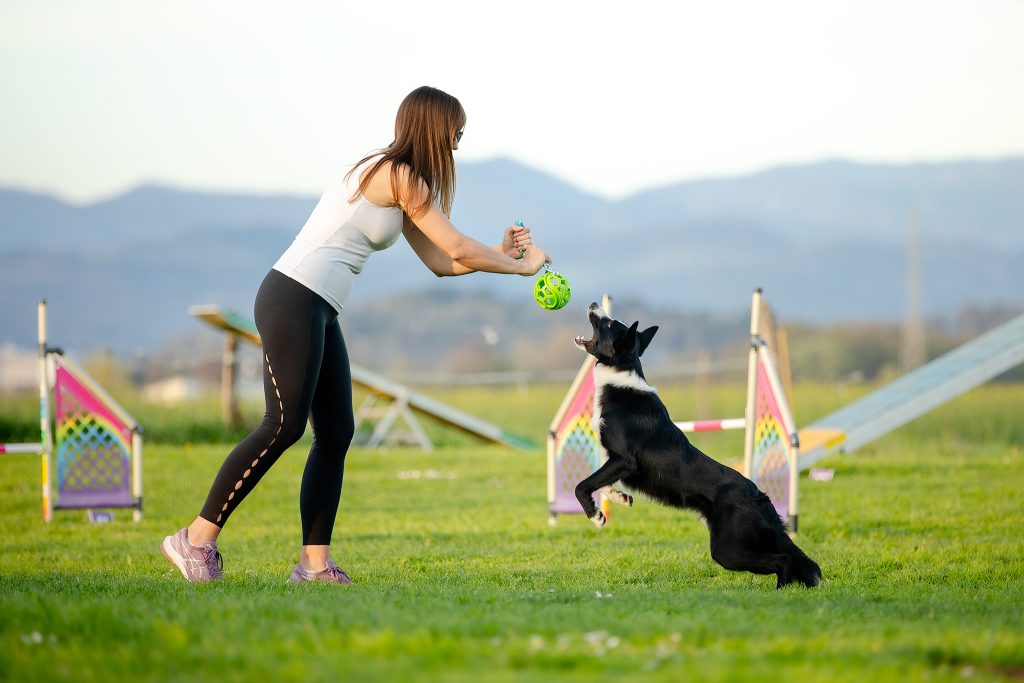
For example, prey drive is inherited from a dog’s wolf ancestors. This drive manifests as the instinct to find, chase, catch and kill the prey/food. We see it when dogs play – when they chase balls, tug on a rope, or rip apart a plush toy. While the intensity of these instincts varies among breeds and individuals, they are always present.
How Does This Relate To Agility?
The challenges mentioned earlier often arise in high-driven working dogs—dogs that are intelligent, eager to please, and have great working abilities. However, these same dogs can become “victims” of their own instincts when external stimuli trigger automatic responses.
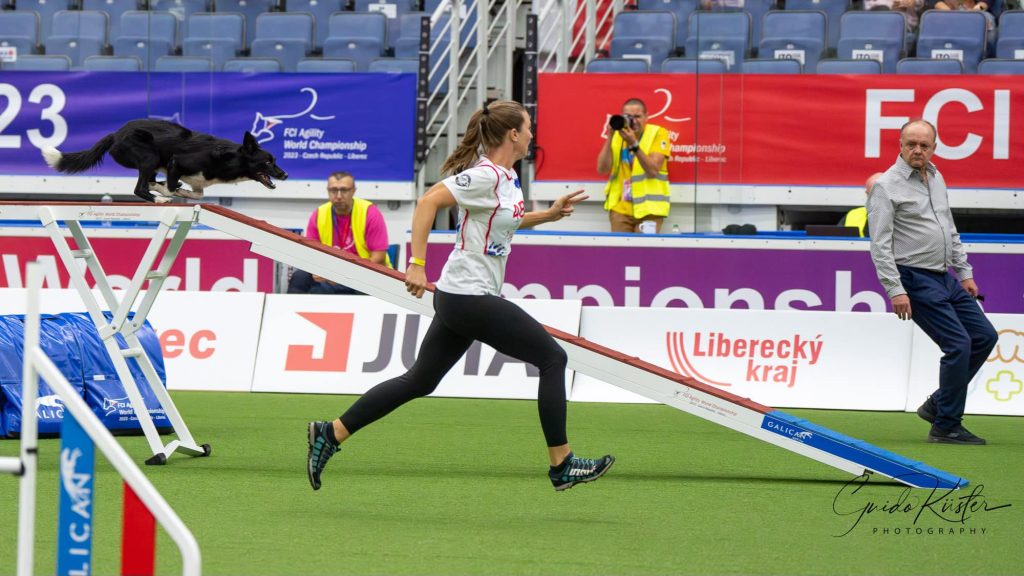
Let’s take running contacts as an example. A dog may consistently perform the target behavior during training, adjusting the strides to hit it perfectly in every situation. But in a real agility setting—with speed, movement, and handling involved—the dog leaps over the target/contact and runs full speed towards the handler or the obstacle that follows. In such cases, the dog isn’t being disobedient, stupid and doesn’t do it with a purpose to make you angry. Their instincts are simply overriding the learned behavior, making it impossible for them to perform as expected.
When speed, excitement, handler’s motion etc. awaken dog’s chasing or herding instincts, the thinking brain is bypassed. The instinctual brain takes control, prioritizing speed and position over precision. The result? The dog “forgets” to decelerate or control his strides, even though they have demonstrated the knowledge and ability to do so in the past.
When the thinking and instinctive parts of the brain don’t work harmoniously the result is usually the dog getting nervous, barking, jumping, biting you … or simply shutting down, refusing to cooperate, or even leaving the training field. So, when this happens– this is your dog’s way of telling you that the situation is too difficult for him to cope with.
Why Does The Dog Keep Repeating The Mistake Even if Not Rewarded?
This is a common misconception. Even if the dog doesn’t get a toy or treat as a reward, they are still being reinforced—by satisfying their instincts. For example:
• A Border Collie avoiding a jump, circling instead, or giving you “the eye” when they are supposed to move to the bottom of the 2on2off position is fulfilling their herding instinct, which is inherently rewarding.
• A Sheltie barking excessively when you suddenly stop on the course is engaging in behavior that satisfies their herding instincts.
• A Terrier biting your leg instead of entering the tunnel is channeling their prey drive, which reinforces the behavior.
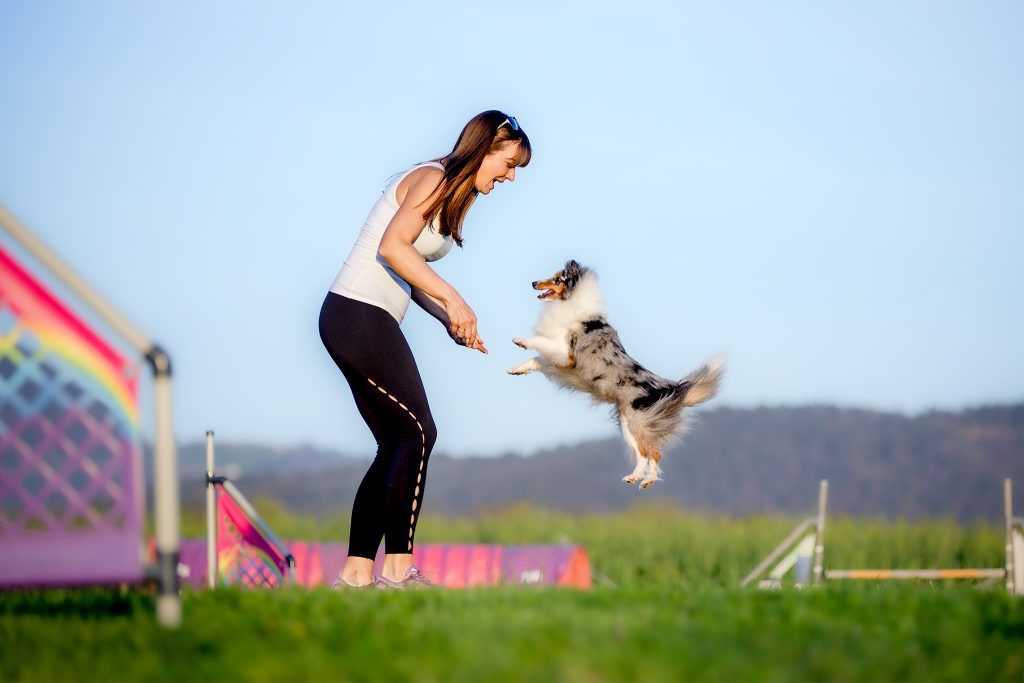
These behaviors show that dogs can self-reward through instinctual satisfaction, even when we withhold external rewards like treats or toys.
The Importance of Avoiding These Situations
It’s crucial to prevent situations where unwanted behaviors are reinforced. Even though you may not be actively rewarding your dog for undesired actions, the instinctual reward they receive strengthens the behavior. If these mistakes are repeated often, they become habits, making the training harder in the future.
The Role of Habits
Habits also reside in the instinctual brain. A habit is a repeated behavior that occurs almost automatically.
When my Lexi was a puppy, we lived in the city center, and our daily walks took us through a popular park. The park wasn’t just popular among dog owners but also among joggers and cyclists. To avoid accidents, I asked her to lie down each time a jogger or cyclist approached, then released her so she could run freely again. It didn’t take long for her to start lying down automatically whenever she saw a bike approaching. She still does this now, at the age of 12, even though we almost exclusively walk in forests where we rarely meet anyone.
Another example is when you ask your dog to sit before meals. Over time, they might start sitting as soon as they see their food bowl. In this case, the visual cue (the bowl) becomes the trigger for the behavior (sitting).
In agility, this process is often referred to as muscle memory. A specific cue elicits an automatic response, not because the dog is consciously thinking about it, but because the behavior has been ingrained through repetition.
It’s incredibly useful when a dog develops these helpful habits, like lying down when seeing a cyclist. The less fun part is when the habits formed aren’t so helpful.
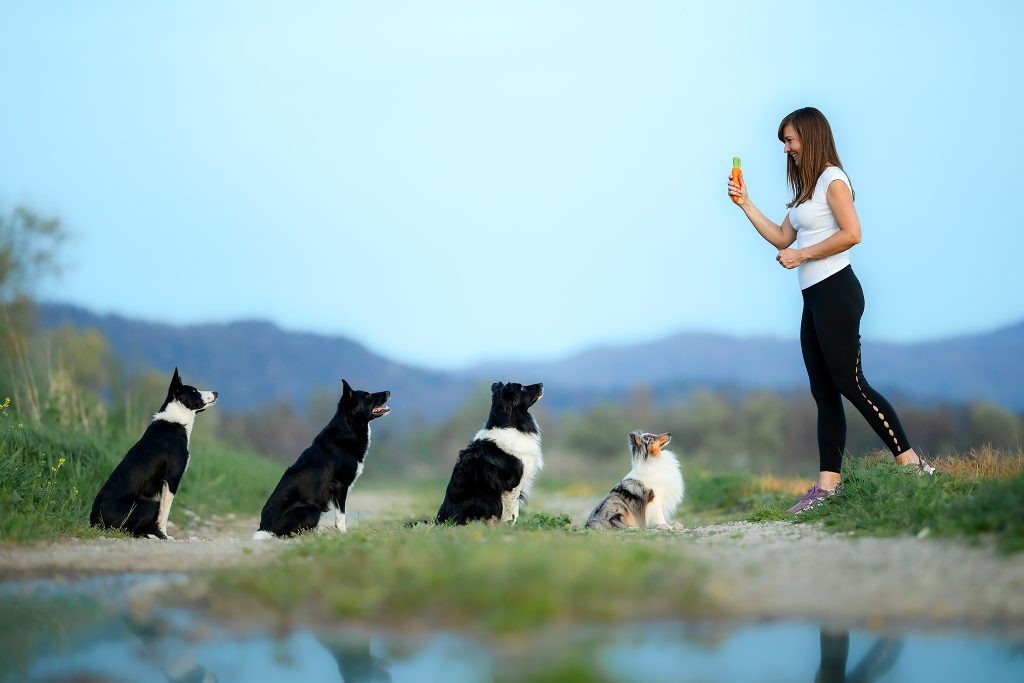
For instance, if you often release your dog from the start line at the moment when running past the first jump, the dog might begin associating your position— and not the actual release command—with permission to go. Over time, this pattern becomes a habit, and breaking it can be very challenging.
To make things even more difficult, your position ahead can trigger the dog’s prey instinct, creating two strong driving forces telling your dog not to wait.
Why Does the Brain Automate Behaviors and Form Habits?
The answer lies in biology. The brain runs on glucose but lacks its own storage. Since the thinking brain consumes significant energy, the brain creates shortcuts whenever possible. These shortcuts—habits and automatic behaviors—reduce energy demands, conserving glucose for critical decision-making.
Habits are great and can make life much easier—if we focus on creating good ones. However, bad habits can be frustrating. Once connections in the brain are formed, they can’t be undone. But more on how to address that problem next time.
In Summary
The challenges we often encounter in agility stem from the interplay between a dog’s thinking brain and its instinctual brain. While the thinking brain processes information and makes deliberate decisions, the instinctual brain reacts automatically, driven by built-in drives and habits. Understanding this dynamic is key to addressing repeated mistakes and helping our dogs succeed.
In my next article, I will share practical solutions for fostering harmony between the thinking and instinctual brain, ensuring your dog can perform confidently and consistently.
Like what you’ve read? Sign up to my newsletter so you don’t miss new articles when published.